


Rating Scale
Purpose
IIRA communicates its opinions on ratings to investors and other stakeholders through symbols. The definitions of ratings are explained in this document.
Rating Symbols & Definitions
Gradations of creditworthiness or the level of compliance is indicated by rating symbols, with each symbol representing a group in which the credit characteristics or level of compliance are broadly the same. The symbols are specific to the rating in question and are provided with accompanying definitions in this document.
International Scale Ratings and National Scale Ratings
International scale ratings express the ability of an entity to meet its international obligations in foreign currency. These ratings are largely capped by the sovereign ceiling and are comparable in the global context.
Local currency ratings on an international scale express the ability of an entity to meet its obligations in its local or domestic currency and may be higher than foreign currency ratings.
National scale ratings express the ability of an entity to meet its domestic obligations in its local or domestic currency, within the national context. These ratings assume the local sovereign to be the best risk in the domestic context and anchored at AAA.
Suspension
In the event that IIRA deems that, as a result of lack of cooperation with regard to the provision of information or for any other reason, it is not possible to assess the current status of the assigned rating, it will be suspended..
Withdrawal
- Rating(s) are withdrawn in the following situations:
- Non-renewal / cancellation of the rating agreement
- Maturity of a rated issue
- Cessation of an entity for any reason
Rating Outlooks
The three outlooks 'Positive', 'Stable' and 'Negative' qualify the potential direction of the assigned rating(s). An outlook is not necessarily a precursor of a rating change.
Rating Watch-list
IIRA places entities and issues on 'Watch-list' when it deems that there are conditions present that necessitate re-evaluation of the assigned rating(s). A 'Watch-list' announcement means that the status of the assigned rating(s) is uncertain and an event or deviation from an expected trend has occurred or is expected and additional information is necessary to take a rating action.
Definition of Default
Default is defined as an issuer’s failure to meet its obligation on time. The circumstances leading to default may be obligor’s unwillingness or inability to pay.
Ratings Validity – Time Horizon
Short-term ratings provide an estimation of repayment capacity over a future time horizon of up to one year. Long-term ratings indicate repayment capacity over a 2-3 year time horizon.
Issue/ Issuer Rating Scale & Definitions
Medium to Long Term
IIRA uses a scale of AAA to C to rate credit worthiness of the issuer and long term issues with AAA being the highest possible rating and C being the lowest possible rating.
- AAA
Highest credit quality. Represent the least credit risk. - AA
High credit quality. Protection factors are strong. Risk is modest but may vary slightly from time to time because of economic conditions. - A
Good credit quality. Protection factors are adequate. Risk factors may vary with possible changes in the economy. - BBB
Adequate credit quality. Protection factors are reasonable and sufficient. Risk factors are considered variable if changes occur in the economy. - BB
Obligations deemed likely to be met. Protection factors are capable of weakening if changes occur in the economy. Overall quality may move up or down frequently within this category. - B
Obligations deemed less likely to be met. Protection factors are capable of fluctuating widely if changes occur in the economy. Overall quality may move up or down frequently within this category or into higher or lower rating grade. - CCC
Considerable uncertainty exists towards meeting the obligations. Protection factors are scarce and risk may be substantial. - CC
A high default risk. - C
A very high default risk. - D
Defaulted obligations.
Note:
IIRA appends modifiers + or - to each generic rating classification from AA through B. The modifier + indicates that the obligation ranks in the higher end of its generic rating category; no modifier indicates a mid-range ranking; and the modifier - indicates a ranking in the lower end of that generic rating category.
The suffix R indicates that the assigned rating is restricted in terms of not being applicable to or relevant to a particular currency or jurisdiction.
Short Term
IIRA uses a scale of A1+ to C to rate credit worthiness of the issuer and its short term obligations, with A1+ being the highest possible rating and C being the lowest possible rating.
- A1+
Highest certainty of timely payment. Short-term liquidity, including internal operating factors and / or access to alternative source of funds, is outstanding and safety is just below risk free short-term obligations. - A1
High certainty of timely payment. Liquidity factors are excellent and supported by good fundamental protection factors. Risk factor are minor. - A2
Good certainty of timely payment. Liquidity factors and company fundamentals are sound. Access to capital markets is good. Risk factors are small. - A3
Satisfactory liquidity and other protection factors qualify entities / issues as to investment grade. Risk factors are larger and subject to more variation. Nevertheless, timely payment is expected. - B
Speculative investment characteristics. Liquidity may not be sufficient to ensure timely payment of obligations. - C
Capacity for timely payment of obligations is doubtful.
The long term obligations rated BBB- and above are considered investment grade while obligations rated BB+ and below are sub-investment grade.
IIRA is sponsored by multilateral development institutions, leading banks, other financial institutions and rating agencies. Its shareholders operate from eleven countries which constitute the agency’s primary marketing focus.
The short term obligations rated A3 & above are investment grade while short term obligations rated B and C are sub-investment grade.
The suffix R indicates that the assigned rating is restricted in terms of not being applicable to or relevant to a particular currency or jurisdiction.
Symbols
Plus/minus (+/-) signs: A plus (+) or minus (-) sign may be added to the ratings to show the relative standing of the obligor/Sovereign within a category. These signs are only added to the ratings from 'AA' to 'B'.
Outlook:
The three outlooks 'Positive', 'Stable' and 'Negative' qualify the potential direction of the assigned rating(s). An outlook is not necessarily a precursor of a rating change.
A1:
High certainty of timely payment. Liquidity factors are excellent and supported by good fundamental protection factors. Risk factor are minor.
Rating Watch-list:
IIRA places entities and issues on 'Watch-list' when it deems that there are conditions present that necessitate re-evaluation of the assigned rating(s). A 'Watch-list' announcement means that the status of the assigned rating(s) is uncertain and an event or deviation from an expected trend has occurred or is expected and additional information is necessary to take a rating action.
Definition of Default:
Default is defined as an issuer’s failure to meet its obligation on time. The circumstances leading to default are obligor’s unwillingness to pay or inability to pay.
Suspension:
In the event that IIRA deems that, as a result of lack of cooperation with regard to the provision of information or for any other reason, it is not possible to assess the current status of the assigned rating will be suspended.
Withdrawal:
Rating(s) are withdrawn in the following situations:
- Non-renewal / cancellation of the rating agreement.
- Maturity of a rated issue.
- Cessation of an entity for any reason.
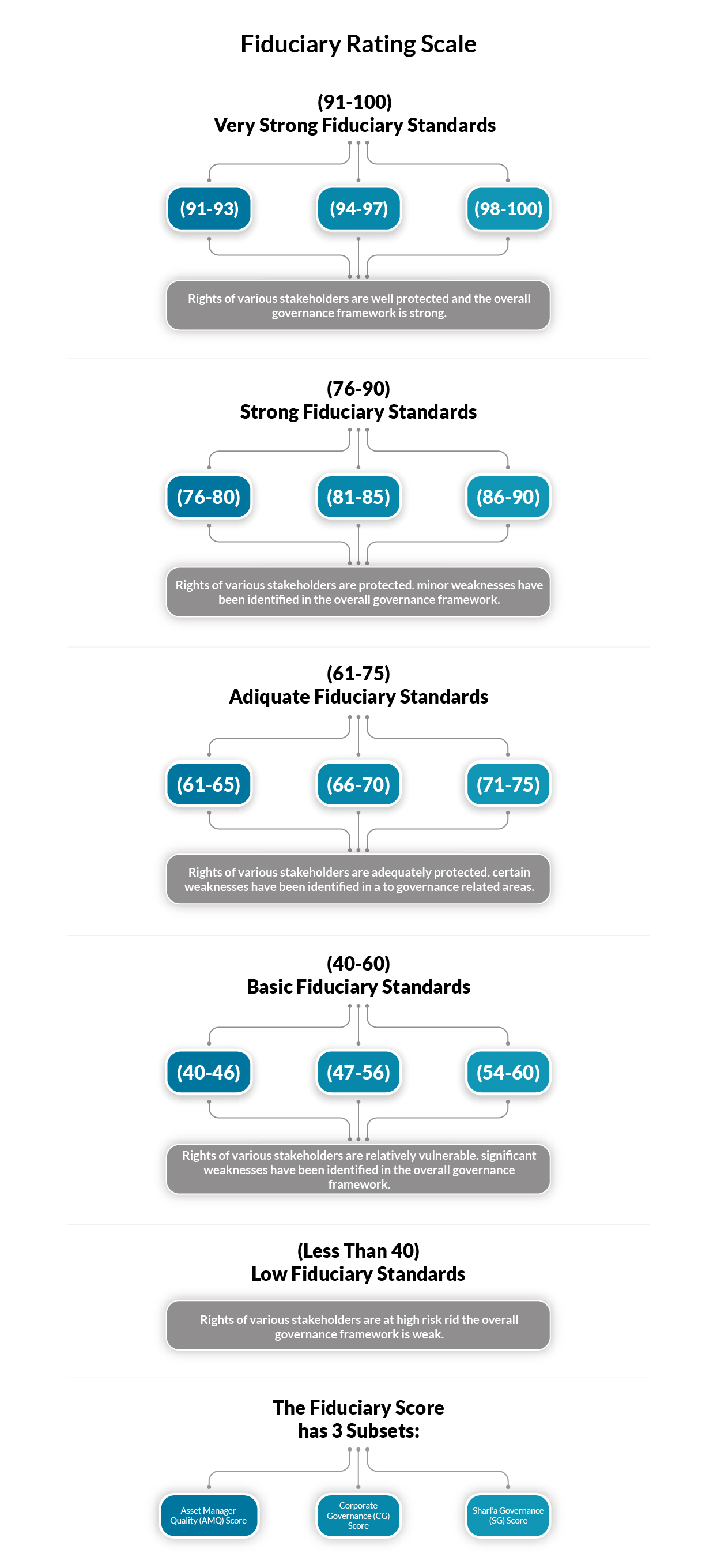
Takaful Financial Strength (Tfs) Rating Scale & Definitions
Takaful Financial Strength
-
AAA
Rated takaful companies have the strongest financial strength and the strongest capacity to meet policyholder obligations. Unfavorable business and economic conditions are unlikely to distress this ability. -
AA
Rated takaful companies have very strong financial strength and a very strong capacity to meet policyholder obligations. No material change in this capacity is expected due to unfavorable business and economic conditions in future. -
A
Rated takaful companies have sound financial strength and a strong capacity to meet policyholder obligations. An adverse change in business and economic conditions may slightly affect this capacity. -
BBB
Rated takaful companies have adequate financial strength and sufficient capacity to meet policyholder obligations. However, unfavorable business conditions can affect the firm’s financial strength. -
BB
Rated takaful companies have marginal financial strength and a low capacity to meet policyholder obligations. The entity remains vulnerable to changes in the business and economic environment. -
B
Rated takaful companies have weak financial strength and a weak ability to meet policyholder obligations. The entity requires favorable business conditions to ensure payments. -
C
rated takaful companies have very weak financial strength and a very weak capability to meet policyholder obligations. The firm is unable to benefit from prospective improvement in the economic environment. -
D
Rated takaful companies have extremely weak financial strength and insufficient capacity to meet policyholder obligations. These companies require periodic external support or regulatory intervention, without which their continued viability is in doubt.
Note:
IIRA appends modifiers ‘+’ or ‘–’ (plus or minus) to each generic rating classification from AA through B. The modifier ‘+’ indicates that the entity ranks in the higher end of its generic rating category; no modifier indicates a mid-range ranking; and the modifier ‘–’ indicates a ranking in the lower end of that generic rating category.
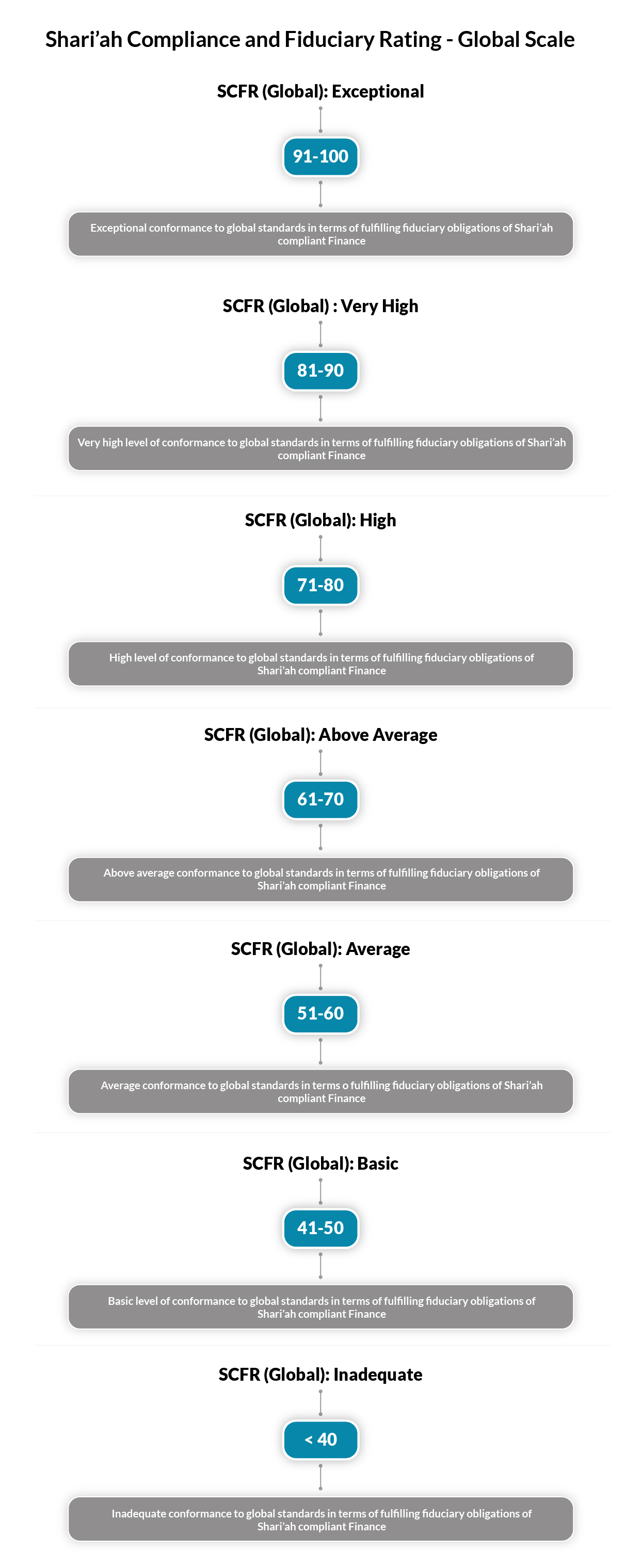
Shari'a Rating Scale and Definitions
Shari'a Rating
IIRA uses a scale of AAA (sq) to B (SQ) to rate Shari'a Quality Compliance with AAA (sq) being the highest possible rating and B (SQ) being the lowest possible rating.
-
AAA (sq)
In IIRA’s opinion, an entity/instrument rated AAA (sq) conforms to highest level of standards of Shari’a requirements in all aspects of Shari’a quality analysis. -
AA (sq)
In IIRA’s opinion, an entity/instrument rated AA (sq) conforms to very high level of standards of Shari’a requirements in all aspects of Shari’a quality analysis. -
A (sq)
In IIRA’s opinion, an entity/instrument rated A (sq) conforms to high level of standards of Shari’a requirements and has very few weaknesses in some areas of Shari’a quality analysis. -
BBB (sq)
In IIRA’s opinion, an entity/instrument rated BBB (sq) conforms to moderately high level of standards of Shari’a requirements and has few weaknesses in some areas of Shari’a quality analysis. -
BB (sq)
In IIRA’s opinion, an entity/instrument rated BB (sq) conforms to satisfactory level of standards of Shari’a requirements and has some weaknesses in some areas of Shari’a quality analysis. -
B (sq)
In IIRA’s opinion, an entity/instrument rated B (sq) conforms to adequate level of standards of Shari’a requirements and has weaknesses in some areas of Shari’a quality analysis. -
C
rated takaful companies have very weak financial strength and a very weak capability to meet policyholder obligations. The firm is unable to benefit from prospective improvement in the economic environment. -
D
Rated takaful companies have extremely weak financial strength and insufficient capacity to meet policyholder obligations. These companies require periodic external support or regulatory intervention, without which their continued viability is in doubt.
Note:
IIRA appends modifiers + or - to each generic rating classification from AA through B. The modifier + indicates that the obligation ranks in the higher end of its generic rating category; no modifier indicates a mid-range ranking; and the modifier - indicates a ranking in the lower end of that generic rating category.
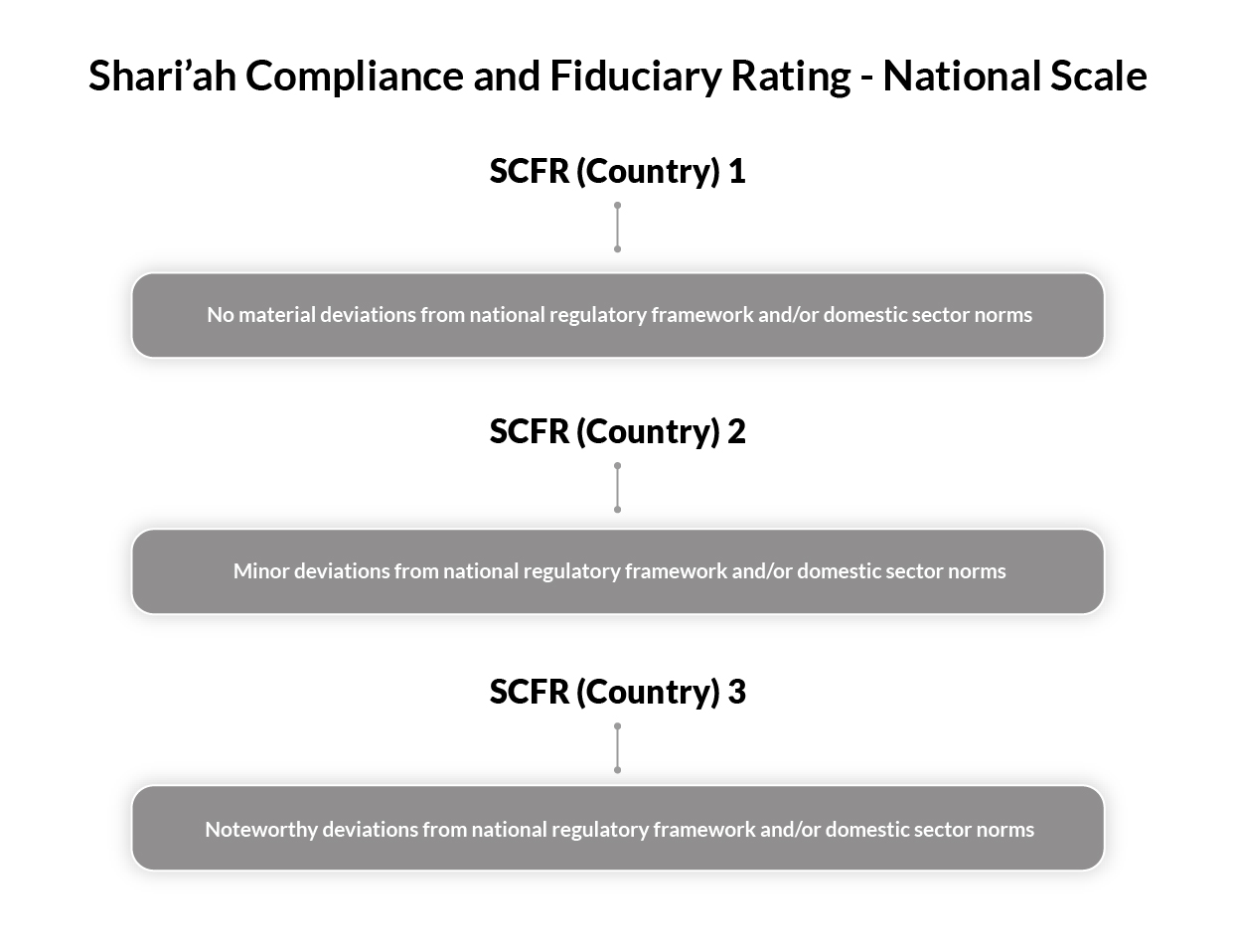
Sovereign Rating Scale
Medium to Long Term
IIRA uses a scale of AAA to C to rate credit worthiness of the issuer and long term issues with AAA being the highest possible rating and C being the lowest possible rating.
-
AAA
Highest credit quality. Represent the least credit risk. -
AA+, AA, AA-
High credit quality. Protection factors are strong. Risk is modest but may vary slightly from time to time. -
A+, A, A-
Good credit quality. Protection factors are adequate. Risk levels may vary or on time to time. -
BBB+, BBB, BBB-
Adequate credit quality. Protection factors are reasonable and sufficient. Risk factors are considered relatively less stable. -
BB+, BB, BB-
Obligations deemed likely to be met. Protection factors are capable of weakening if changes occur in the economy. Overall quality may move up or down frequently within this category. -
B+, B, B-
Obligations deemed less likely to be met. Protection factors are capable of fluctuating widely if changes occur in the economy. Overall quality may move up or down frequently within this category or into higher or lower rating grade. -
CCC
Considerable uncertainty exists towards meeting the obligations. Protection factors are scarce and risk may be substantial. -
CC
A high default risk. -
C
A very high default risk. -
D
Defaulted obligations.
Short Term
The obligations having an original maturity not exceeding one year are considered short term. IIRA uses a scale of A1+ to C to rate credit worthiness of short term obligations, with A1+ being the highest possible rating and C being the lowest possible rating.
-
A1+
Superior ability for repayment of obligations, evidenced by extremely strong liquidity conditions. -
A1
Strong ability for repayment and reflecting very good liquidity conditions. -
A2
Sound capacity of repayment but could be affected by external market conditions. Risk levels may vary from time to time. -
A3
Adequate ability to repay the obligations. However, risk factors are more susceptible to adverse market conditions. -
B
The obligations rated B have weak capacity for repayment and economic changes can harm liquidity conditions. -
C
Obligations rated C shows considerable uncertainty towards timely payments of obligations. The liquidity conditions appear very weak.
CORPORATE GOVERNANCE RATING SCALE AND DEFINITIONS
Corporate Governance
IIRA uses a scale of CGR-1 to 10 to rate Corporate Governance with CGR-10 being the highest possible rating and CGR-1 being the lowest possible rating.
-
CGR-10
Strongest Corporate Governance processes and practices overall, with very few weaknesses in any of the major areas of governance analysis. -
CGR-9, CGR-9+, CGR-9++
Very strong Corporate Governance processes and practices overall, with few weaknesses in any of the major areas of governance analysis. -
CGR-8, CGR-8+, CGR-8++
Strong Corporate Governance processes and practices overall, with some weaknesses in certain of the major areas of governance analysis. -
CGR-7, CGR-7+, CGR-7++
Moderately strong Corporate Governance processes and practices overall, with weaknesses in certain of the major areas of governance analysis. -
CGR-6, CGR-6+, CGR-6++
Satisfactory Corporate Governance processes and practices overall, with some weaknesses in several of the major areas of governance analysis. -
CGR-5, CGR-5+, CGR-5++
Adequate Corporate Governance processes and practices overall, with weaknesses in several of the major areas of governance analysis. -
CGR-4, CGR-4+, CGR-4++
Moderately weak Corporate Governance processes and practices overall, with weaknesses in a number of the major areas of governance analysis. -
CGR-3, CGR-3+, CGR-3++
Weak Corporate Governance processes and practices overall, with significant weaknesses in a number of the major areas of governance analysis. -
CGR-2, CGR-2+, CGR-2++
Very weak Corporate Governance processes and practices overall, with significant weaknesses in most of the major areas of analysis. -
CGR-1, CGR-1+, CGR-1++
Weakest level of Corporate Governance processes and practices overall, with significant weaknesses in most of the major areas of analysis.